
Wednesday, February 29, 2012

Tuesday, February 28, 2012

MP5 OPT 4: Motivation and Objectives
One of the fundamental and vitally important aspects of video games today is the concept of motivation for the player, strung together through a series of objectives. When playing the game, you have to feel as if what you are doing is at least important enough for you to care and progress forward. If not, the game falls flat, and they have not entertained the player through story and gameplay at its most basic elements. Most games today whether single one time experiences or through years of a game's franchise, have these moments to keep players going. One franchise that reflects this and has been for 26 years, is the Legend of Zelda; a personal favorite of mine. The reason is in its simple yet addicting play style. The hero Link saves the princess Zelda from evil, usually evil in the form of Ganon, and the player is pushed through the game based on this building block concept as the foundation for play. And besides varying differences through the games releases over the years, the form is essentially the same each time. So why have players been anxiously returning to the series again and again? Its because it knows how to create objectives, and how to pace a game's conflicts and puzzles. Its the Zelda formula.
With the overarching quest theme as the background, players know what to expect from Zelda: Gather weapons and items in the hub world, locate and search through dungeons, encounter a mini boss, get a new item, progress in the dungeon, beat the boss, get some kind of important quest item, and head back to the established overworld to do it again. Each time it feels different, yet somehow the same. It creates a sense of familiarity from game to game, and ever since the first adventure in 1986, it works wonders to keep players moving through the game.
The mini boss reward is what keeps the dungeon exciting. Players expect it, and love it. And to reach that first conflict inside the puzzling chambers of Zelda dungeons, gamers are encouraged and motivated to explore and use their brain. This only enhances the experience, and makes you want to reach that boss and take whats yours. Its all about getting the girl in the end, and saving the day from evil's grasp.
Objectives and motivations are important in games. But that statement carries a lot more weight than it seems. In fact its an understatement. In a series like Zelda, its clear, but it can be said about any other successful franchise out there. The ones that succeed are the ones that understand that games are more than just getting a high score or shooting at something because you hand us a virtual gun. Its about making sure we want to play your game because we legitimately care about what happens. That we feel that playing this game is worth our time, and that there will be clear objectives showing the path to get that girl waiting for us at the top of the castle.
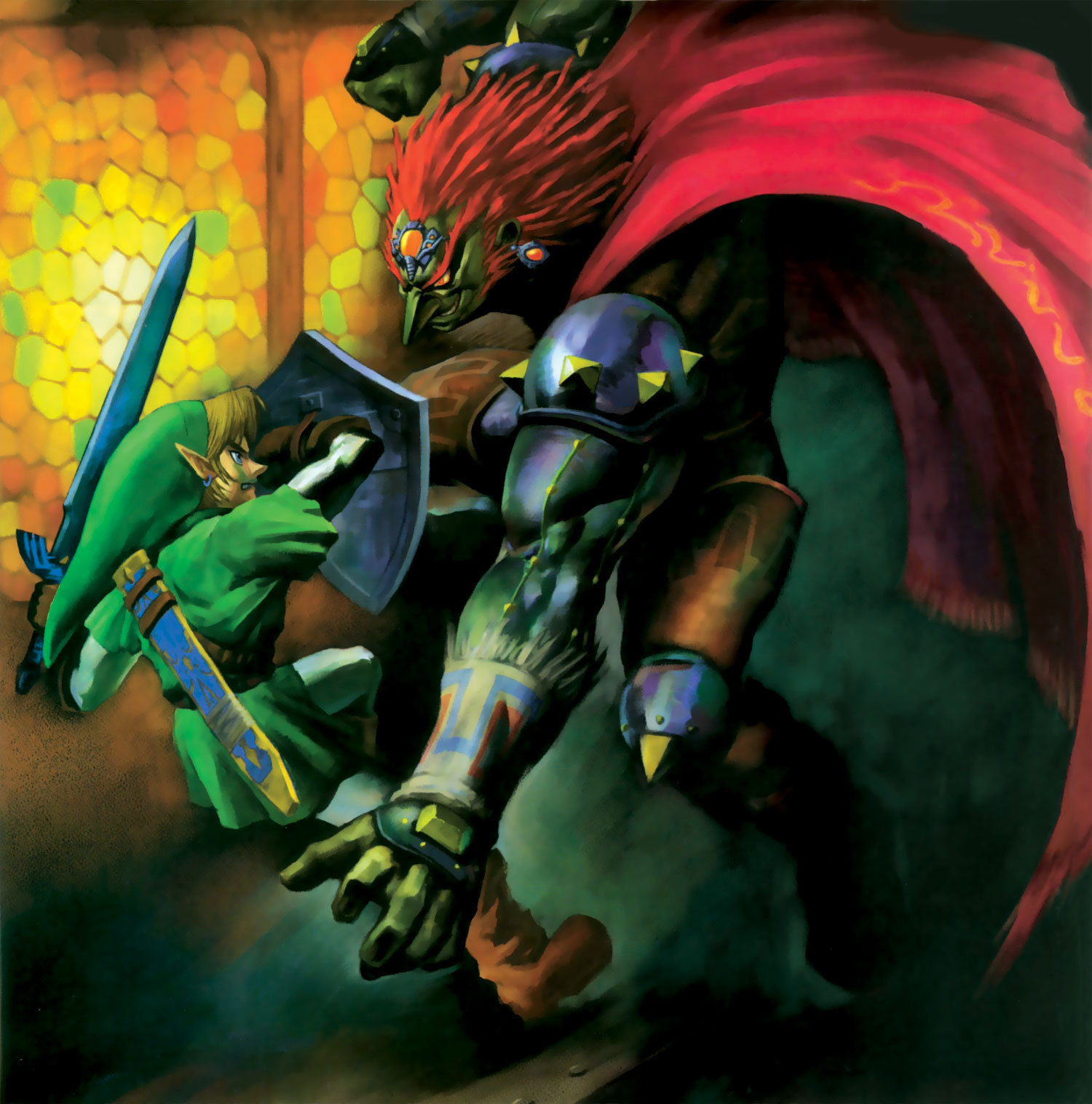 |
| 26 years later and fans are still fighting Ganon. |
With the overarching quest theme as the background, players know what to expect from Zelda: Gather weapons and items in the hub world, locate and search through dungeons, encounter a mini boss, get a new item, progress in the dungeon, beat the boss, get some kind of important quest item, and head back to the established overworld to do it again. Each time it feels different, yet somehow the same. It creates a sense of familiarity from game to game, and ever since the first adventure in 1986, it works wonders to keep players moving through the game.
 |
| Since the beginning the objectives were clear: kill the baddies, save the princess. |
 |
| Getting to that final boss is the push for gamers to progress. |
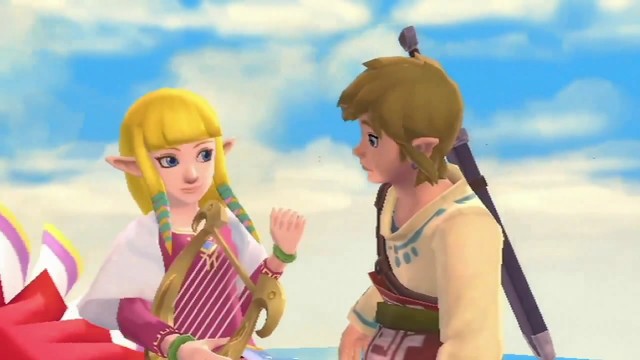 |
| It has to all be worth it in the end. And thats what Zelda does best. |
Monday, February 27, 2012
MP5: OPT1- Pitch Document for C.T.F: BATTLEGROUNDS
C.T.F.
: BATTLEGROUNDS
(CAPTURE THE FLAG)
Pitch
Document
Author: Derek Sabety
Date: 2/27/12
OVERVIEW
Taking
the classic game of Capture the Flag and bringing it to the digital
world, C.T.F.: Battlegrounds is a multi-platform strategy title that
allows players to best their friends or computer AI in six on six
C.T.F. battles. There will be additional varying game modes for
different scenarios and play styles. Examples of such would include
larger battles of eight on eight, or smaller versions condensed to
four. These are included in the “classic” style of play, but also
in the BATTLEGROUND MODE version as well.
The
platforms handling the game would include the iPhone, iPad, Android
tablets, and a Facebook version as well. Its the best way to have the
game accessible anywhere and at anytime, and allow players to share
the scores and strategies with their friends. The game will be
monetized through ads and deluxe versions of the game, which will
include more playing field maps and a bonus DEFEND THE FLAG mode.
WHY ARE WE MAKING
THIS GAME?
The
original Capture the Flag is a great outdoor game, but its not really
played as much as it was in earlier years, and even then it was
generally left for kids. But now with digital games and technology,
we can bring the game to all new age groups, specifically the 17-25
age demographic, with a modern twist to a strategy classic. By
turning it into a touch and go multi-platform digital game, we can
make it new, exciting and competitive by transforming it with flashy
graphics, art and sound, all mixed in with the new game modes that
will change how young adult audiences think about C.T.F. We can tap
into the appeal of casual games, by creating an easy to learn and
diverse version of Capture the Flag, that will aim to have a little
something for everyone.
WALK US THROUGH THE
GAME
Players
begin by selecting their game mode, which may vary in options
depending on if they are using the standard or deluxe version of the
game. Players will choose the team size for the match, and then the
number of individually assigned classes for their AI teammates.
Players will create a custom team made up of defenders, hunters, and
chasers. Players will then choose their team color, a choice in the
battleground playing map for the match, and then be given a position
for their flag on the field. The player then acts as the “leader”
for their team, positioning them where they want on the field to
create strategy, as each AI class has different strengths and
weaknesses. Players, seeing only their opponents defenders and flag
visible on the map, attempt to turn by turn move their players across
the field, to reach the flag. In game items and game modes will
change gameplay, depending on what the players feel like doing. But
each offers this same basic concept, with the exception of DEFEND THE
FLAG mode, which entails on player creating a barrier of teammates to
defend the flag from being taken by an oncoming and increasingly
difficult horde of flag hunters.
SIMILAR
GAMES
RTS/Strategy
games
Battleship
http://en.wikipedia.org/wiki/Battleship_(game)
Civilization
http://en.wikipedia.org/wiki/Civilization_(video_game)
Defend
Your Castle http://en.wikipedia.org/wiki/Defend_Your_Castle
Friday, February 24, 2012

Monday, February 20, 2012
RPS: Two Players
I believe that RPS should remain a two player game. Adding more than two players only complicates things, and starts to cloud up the concept of two players using random chance mixed with strategy and predictions to beat their opponent. Adding to much to a game does not always make it better, it can just make it more confusing and add unnecessary features. RPS needs to stay balanced enough where two people can cleanly cycle through the 3 options without worrying about other circumstances.
RPS: Linear, Non-Linear, or Sandbox?
I believe Rock, Paper, Scissors, is a non-linear game. The reason being is that there are different ways to play the game, and different outcomes during gameplay. Its not linear in that the outcomes are random, and the game is flexible. Its not sandbox because its not an open customizable game with almost unlimited options. Its non linear because it has defined rules but there are those options in gameplay and the randomness to it.
Subscribe to:
Posts (Atom)